Understanding Sunglasses Lens Size: A Comprehensive Guide
Navigating the world of sunglasses requires understanding lens size, crucial for comfort and style. Precise measurements—like 52-18-140—dictate the frame’s fit on your face.
What is Lens Size and Why Does it Matter?
Lens size isn’t arbitrary; it’s a set of precise measurements defining how sunglasses will sit on your face and impact your vision. These aren’t random digits, but critical dimensions determining comfort and aesthetic appeal. A proper fit ensures optimal UV protection, preventing light leakage around the edges.
Incorrect sizing can lead to discomfort, slippage, and even headaches. Understanding these measurements—lens width, bridge width, and temple length—empowers you to select sunglasses that complement your facial features and provide a secure, enjoyable wearing experience. Choosing the right size enhances both functionality and style.
Key Measurements: Decoding the Numbers
Sunglasses sizing is typically represented by three numbers, like 52-18-140, each denoting a specific dimension. The first number (e.g., 52mm) indicates the lens width – the horizontal measurement of one lens. The second number (e.g., 18mm) represents the bridge width, the distance between the lenses.
Finally, the third number (e.g., 140mm) signifies the temple length, or arm length, extending from the hinge to the end of the temple. Lens height, while less commonly listed, determines vertical coverage. Understanding these measurements is key to finding a comfortable and well-fitting pair.
Lens Width

Lens width is the horizontal measurement of a single lens, typically expressed in millimeters (mm). This is the first number you’ll encounter in a sunglasses size designation, such as 52-18-140, where 52 represents the lens width.
A proper lens width ensures your eyes are adequately covered and comfortably positioned within the frame. Variations exist; Ray-Ban models often feature lens widths ranging from 55mm to 58mm, while others may differ. Accurate measurement prevents overlap or gaps, contributing to optimal vision and style.

Bridge Width
The bridge width measures the distance between the lenses, sitting across your nose. Represented as the second number in a size sequence (e.g., 52-18-140), it’s crucial for comfort and stability. A bridge width of 18mm is common, but variations exist.
An appropriately sized bridge prevents the sunglasses from sliding down your nose or pinching uncomfortably. Too narrow a bridge can cause discomfort, while a wider one might lead to slippage. Consider your nose shape; a well-fitted bridge enhances both function and the overall aesthetic.
Temple Length (Arm Length)
Temple length, or arm length, is the measurement from the hinge to the end of the temple – where it rests behind your ear. This is the third number in the standard size notation (e.g., 52-18-140). A typical length is around 140mm, though it varies significantly between styles and brands.
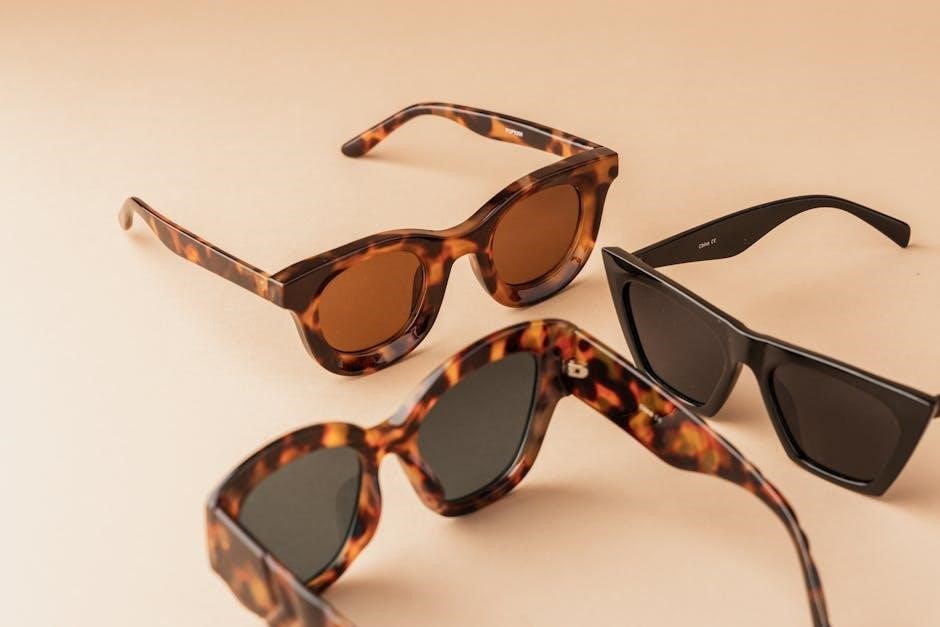
Correct temple length ensures a secure and comfortable fit without excessive pressure. Temples that are too short can cause discomfort behind the ears, while overly long temples may feel unstable. Proper length prevents slippage and maintains the sunglasses’ position throughout wear.
Lens Height
Lens height measures the vertical dimension of the lens, from the top of the lens to the bottom. While often overlooked, this measurement—around 53mm in many cases—impacts how much of your eye area is covered and the overall aesthetic. It’s particularly important for progressive or bifocal lenses.
A sufficient lens height ensures adequate protection from sunlight from all angles, minimizing glare from above and below; It also influences the frame’s balance on your face. Consider this dimension when choosing styles, especially if you require vision correction.
Standard Sunglasses Sizes for Adults
Generally, adult sunglasses fall within specific size ranges, though variations exist between brands and styles. A common size is 52-18-140, representing lens width, bridge width, and temple length, respectively. Lens widths typically range from 48mm to 58mm, while bridge widths usually fall between 16mm and 22mm.
Temple length, crucial for secure fit, commonly measures between 135mm and 150mm. Larger faces often require sizes exceeding these averages, while smaller faces may benefit from more petite frames. Understanding these standards provides a starting point for finding comfortable, well-fitting sunglasses.
How to Measure Your Current Sunglasses
Accurately measuring your existing sunglasses reveals your ideal fit parameters. Begin with lens width: measure horizontally across the widest part of one lens. Next, determine bridge width – the distance between the lenses. Finally, measure the temple length from the hinge to the end of the arm.
Use a ruler in millimeters for precision. These three measurements (e.g., 55-17-140) provide a baseline for online shopping or when seeking assistance from an optician. Knowing these dimensions ensures a comfortable and stylish sunglass experience.
Measuring Lens Width
To determine lens width, position your sunglasses so you’re viewing them head-on. Using a ruler, measure horizontally across the widest part of one lens. Ensure the ruler starts and ends at the lens’s outermost points, excluding any frames or embellishments.
Record this measurement in millimeters – this is the first number in a sunglass size designation (e.g., 52 in 52-18-140). Accurate lens width measurement is vital for ensuring the lenses adequately cover your eyes and provide comfortable peripheral vision.
Measuring Bridge Width
The bridge is the part of the sunglasses connecting the two lenses, resting on your nose. To measure it, place the sunglasses facing you and use a ruler to measure the distance between the inner edges of the lenses, right where they begin to curve downwards towards your nose.
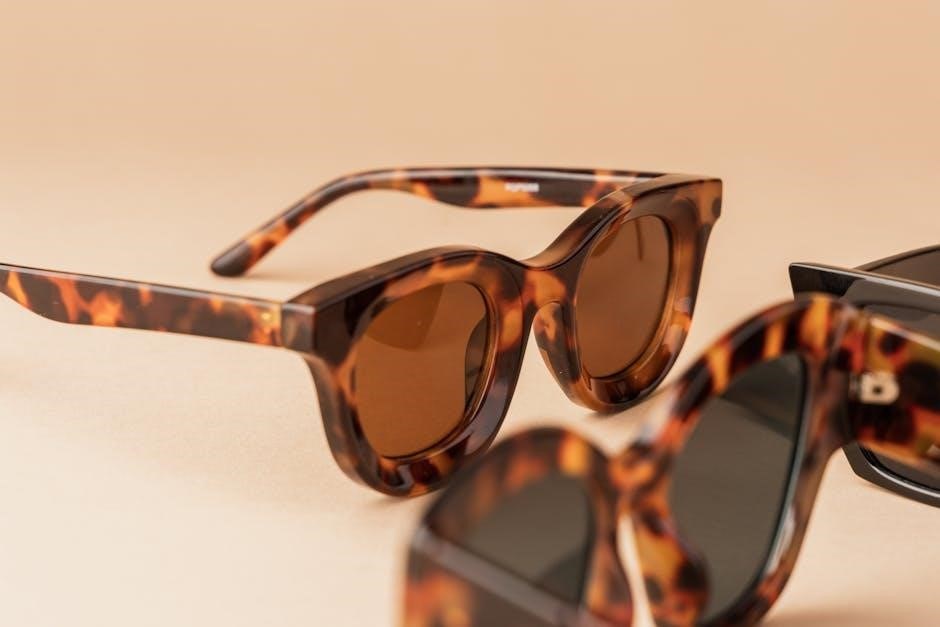
This measurement, also in millimeters, represents the bridge width – the second number in the size sequence (like 18 in 52-18-140). A proper bridge width prevents slippage and ensures a comfortable fit, avoiding pressure points on your nose.
Measuring Temple Length
The temples, or arms, are the extended pieces on either side of the sunglasses that curve around your ears. To measure temple length, place the sunglasses as if you were wearing them and use a ruler to measure from the hinge (where the temple connects to the frame) all the way to the very tip of the temple.
This measurement, in millimeters, is the final number in the size sequence (like 140 in 52-18-140). Correct temple length ensures the sunglasses stay securely on your head without feeling too tight or loose, providing all-day comfort.
Finding the Right Fit for Your Face Shape
Selecting sunglasses that complement your face shape enhances your features and ensures a comfortable fit. For round faces, angular or rectangular frames add definition. Square faces benefit from rounder or oval styles to soften angles.
Oval faces are versatile and suit most shapes, while heart-shaped faces look best with frames wider at the bottom, balancing the narrower chin. Considering both face shape and lens size is key to achieving a harmonious and stylish look.
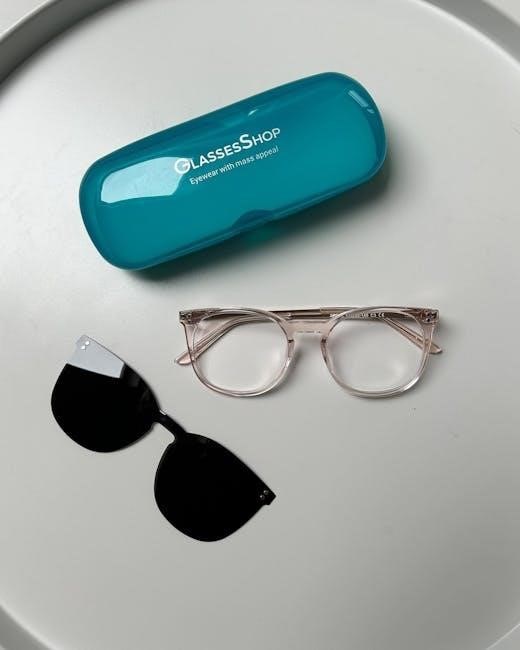
Sunglasses for Round Faces
Individuals with round faces should prioritize sunglasses that create the illusion of angles and length. Frames with sharp, defined lines – such as rectangular or square shapes – work exceptionally well. Avoid round or overly small frames, as these can accentuate the roundness.
Wider frames that extend beyond the widest part of your face are also beneficial. Look for styles with a strong browline to add structure. A slightly upswept shape can lift the face, providing a more sculpted appearance.
Sunglasses for Square Faces
Those with square faces benefit from sunglasses that soften strong angles and add curves. Round or oval frames are excellent choices, as they balance the face’s inherent sharpness. Frames with a delicate or thinner profile can also be very flattering.
Avoid overly angular or geometric shapes, as they can emphasize the squareness of the face. Styles with softer edges and gentle curves will create a more harmonious look. A low-set temple can also help to minimize the width of the face.
Sunglasses for Oval Faces
Considered the most versatile face shape, oval faces can pull off a wide variety of sunglass styles. Experimentation is encouraged! However, maintaining balance is key. Frames that are as wide as—or slightly wider than—the broadest part of the face generally work best.
Square and rectangular frames add angles and definition, while rounder styles soften features. Avoid frames that are too small, as they can disrupt the natural facial harmony. Bold shapes and colors can also be beautifully showcased on an oval face.
Sunglasses for Heart-Shaped Faces
Individuals with heart-shaped faces, characterized by wider foreheads and narrower chins, benefit from styles that balance these proportions. Look for frames that are wider at the bottom than at the top, adding width to the lower part of the face.
Aviator and round styles are excellent choices, softening the angles of the forehead. Cat-eye frames, with their upward sweep, can also complement this face shape. Avoid overly embellished or top-heavy frames, as they can accentuate the wider forehead.
Popular Sunglasses Brands and Their Typical Sizes
Many renowned brands offer a range of sizes, but certain trends exist. Ray-Ban, known for Aviators and Wayfarers, frequently features lens widths between 52-58mm, with bridge widths of 17-18mm and temple lengths around 140mm. Oakley often leans towards slightly larger sizes, catering to a sporty aesthetic.
Variations occur within each brand’s collections; some models prioritize a smaller, more delicate fit, while others offer oversized options. Exploring specific model details is crucial, as sizes aren’t universally consistent across all styles.
Ray-Ban Size Guide
Ray-Ban sunglasses commonly display sizing as three numbers: lens width, bridge width, and temple length (e.g., 52-18-140). The iconic Aviator often ranges from 58-62mm lens width, suitable for medium to larger faces, with a standard 14mm bridge. Wayfarers typically fall between 50-54mm lens width, fitting smaller to medium faces.
However, Ray-Ban offers diverse models. Always check the specific product description online or the markings inside the temple arm for accurate measurements. Considering overall frame width (147mm as an example) provides a complete fit assessment.
Oakley Size Guide
Oakley sunglasses, known for performance and style, utilize a similar sizing system: lens width, bridge width, and temple length. Many Oakley models feature a lens width between 53-61mm, catering to various face sizes. The bridge width generally ranges from 13-18mm, influencing comfort and stability.
Oakley often includes details like ‘Hydrolite rubber pads’ for enhanced fit. Specific models, like the Original Pilot (CDM000R), provide detailed size charts. Checking the product specifications is crucial, as sizes vary significantly across their extensive collection. Consider lens options alongside frame dimensions.
Other Brand Size Variations
Beyond Ray-Ban and Oakley, numerous brands exhibit unique sizing tendencies. Merida frameless sunglasses, for example, weigh just 25.8g and utilize TR-material for durability. Polaroid, available in locations like St. Petersburg, offers diverse styles, but sizing specifics require individual product checks;
Gresso aims to elevate standards, implying a focus on precision, potentially reflected in their sizing. When exploring brands like Vincent Chase or John Jacobs (available with free home delivery and returns), always prioritize reviewing the lens width, bridge, and temple length details provided online.
Understanding Size Terminology (e.g., 52-18-140)
These aren’t random digits; they’re precise measurements defining how a frame will fit. The first number, like ‘52’ in ‘52-18-140’, indicates lens width in millimeters. The second number (‘18’) represents the bridge width – the distance between the lenses. Finally, ‘140’ signifies the temple length, or arm length, extending from the hinge to behind your ear.
Decoding this sequence is vital for a comfortable fit. Knowing these dimensions allows you to compare sunglasses across different brands and models, ensuring optimal vision and all-day wearability;
Lens Size and UV Protection
While lens size primarily impacts fit and aesthetics, it doesn’t directly correlate with UV protection levels. Effective UV protection depends on the lens material and coating, not its dimensions. Larger lenses can offer more coverage, potentially reducing peripheral UV exposure, but this isn’t guaranteed.
Always prioritize sunglasses labeled with ‘UV400’ or that block 100% of UVA and UVB rays, regardless of lens size. Proper UV protection is crucial for eye health, preventing cataracts and other vision problems. Don’t assume larger lenses automatically mean superior protection.
Where to Find Lens Size Information When Shopping Online
When purchasing sunglasses online, lens size details are typically found within the product description. Look for a series of three numbers—like 58-18-142—representing lens width, bridge width, and temple length, respectively. Reputable retailers, such as Ray-Ban and others, clearly display these measurements.
Often, size charts are provided to help you understand how these dimensions translate to fit. Some sites offer virtual try-on tools, while others provide detailed product images showcasing the sunglasses’ scale. Always prioritize sites offering comprehensive sizing information for a successful purchase.
Dealing with Sunglasses That Don’t Fit
If your sunglasses feel uncomfortable, minor adjustments can often improve the fit. Gently bending the temple arms inward can secure them on your head, preventing slippage. For sunglasses with nose pads, carefully adjust them to conform to the bridge of your nose for enhanced comfort and stability.
However, avoid excessive force, as this could damage the frames. If adjustments prove insufficient, consider visiting an optician for professional fitting. They possess specialized tools and expertise to modify frames without causing harm.
Adjusting Temple Arms
Temple arm adjustments are a common fix for ill-fitting sunglasses. Gently warming the temple arms – using your hands or a hairdryer on a low setting – increases their flexibility. Carefully bend the arms inward to create a snugger fit behind your ears, preventing slippage.
Be cautious not to overheat or apply excessive force, which could lead to breakage. Small adjustments are best; repeat as needed until comfortable. If unsure, seek professional help from an optician to avoid damaging your eyewear.
Nose Pad Adjustments
For sunglasses with adjustable nose pads, fine-tuning their position significantly impacts comfort and stability. Gently squeeze the nose pads closer together to increase pressure and lift the glasses higher on your nose, preventing them from sliding down. Conversely, spreading them apart lowers the glasses.
Use your fingers or small pliers (covered with a soft cloth to prevent scratches). Incremental adjustments are key; avoid over-tightening. If the nose pads are difficult to adjust or feel loose, a professional optician can offer more secure and lasting solutions.
Children’s Sunglasses: Sizing Considerations
Selecting sunglasses for children requires a different approach than adult sizing. Children’s faces are smaller and more delicate, demanding a comfortable and secure fit. Prioritize lightweight frames constructed from flexible materials like TR-90 to withstand active play and prevent breakage.
Lens width is crucial; ensure it’s proportionate to their face. Adjustable nose pads and temple arms are beneficial for a customized fit. Look for sunglasses offering 100% UV protection, as children’s eyes are more susceptible to sun damage. A snug, but not tight, fit is ideal.
Frameless Sunglasses Size Considerations
Frameless sunglasses present unique sizing challenges due to the absence of a traditional frame. Lens width becomes even more critical, as it directly impacts the overall look and fit. Pay close attention to the specified lens measurements, typically expressed in millimeters, to ensure proper coverage and proportion to your face.
Bridge width is less of a factor, but temple length remains essential for stability. Because there’s no frame to adjust, a precise fit is paramount. Consider trying on various frameless styles to determine the most comfortable and aesthetically pleasing size for your features.