Guide to Ascending Mont Blanc: A Comprehensive Plan
Mont Blanc, a majestic peak, demands meticulous preparation and respect. This guide provides essential insights for a safe and successful climb, covering all vital aspects.
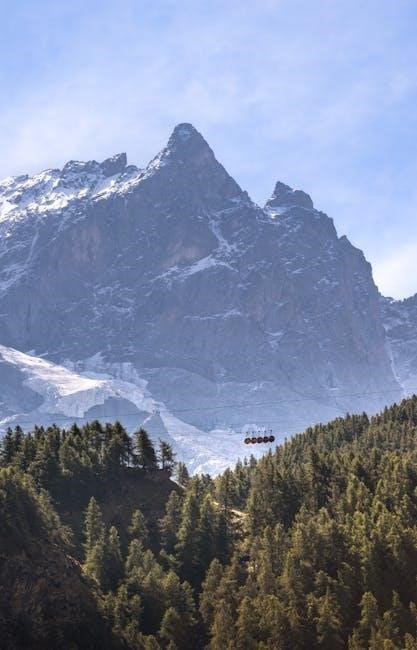
Mont Blanc, standing at 4,807 meters (15,774 feet), is not only the highest peak in the Alps but also a globally renowned mountaineering challenge. Its allure stems from its accessible yet demanding nature, attracting climbers of varying experience levels. However, this accessibility shouldn’t be mistaken for simplicity; Mont Blanc presents genuine hazards requiring thorough preparation, respect for the mountain environment, and a realistic assessment of one’s capabilities.
This iconic mountain straddles the border between France and Italy, offering diverse routes with varying degrees of technical difficulty. Historically, it has captivated adventurers for centuries, becoming a symbol of alpine exploration. Understanding its geological formation, typical weather patterns, and the history of ascents is crucial before embarking on an expedition. Successfully reaching the summit requires more than just physical strength; it demands mental fortitude, sound judgment, and a deep understanding of alpine safety protocols.
Assessing Your Fitness & Experience
A successful Mont Blanc ascent hinges on an honest evaluation of your physical condition and mountaineering background. This isn’t a climb to underestimate; it demands a high level of fitness, encompassing both cardiovascular endurance and muscular strength. You should be comfortable hiking for extended periods with a heavy backpack, navigating steep and uneven terrain, and operating effectively at altitude.
Prior experience in alpine environments is paramount. Familiarity with using crampons and an ice axe, self-arrest techniques, and rope work are essential skills. If you lack this experience, consider enrolling in a mountaineering course or hiring a certified mountain guide. Don’t overestimate your abilities; it’s far better to be overprepared than to risk your safety and the safety of others. A realistic self-assessment is the first, and most crucial, step towards a successful and enjoyable climb.
Required Physical Conditioning
Optimal physical conditioning for Mont Blanc involves a comprehensive training regimen focused on endurance, strength, and altitude preparation. Begin months in advance with regular cardiovascular exercise – running, cycling, and swimming are excellent choices – aiming for at least four sessions per week. Incorporate strength training, concentrating on legs, core, and back, to build the necessary muscle endurance for carrying a heavy pack and navigating challenging terrain.
Hill walking with a weighted backpack is crucial, gradually increasing the distance and elevation gain. Simulate the demands of the ascent by practicing on similar terrain. Include interval training to improve your anaerobic capacity. Consider altitude training, if possible, or spend time at moderate elevations to begin acclimatizing. Prioritize flexibility and mobility exercises to prevent injuries. A consistent and well-structured training plan is non-negotiable for a safe and successful summit attempt.
Mountaineering Experience Levels
Mont Blanc isn’t suitable for beginner mountaineers; prior experience is essential for safety and success. We categorize experience into three levels: Novice, Intermediate, and Experienced. Novices have completed introductory mountaineering courses, demonstrating basic skills like cramponing and ice axe arrest on gentle slopes. They’ve likely undertaken several guided glacier walks.
Intermediate climbers possess experience on more challenging glaciated terrain, including steeper slopes and potentially some crevasse rescue training. They’ve completed several multi-day mountaineering trips. Experienced climbers have extensive alpine experience, including ascents of similar peaks, proficiency in advanced rope techniques, and self-rescue capabilities. Mont Blanc is best suited for Intermediate to Experienced climbers, or Novices accompanied by a certified mountain guide. Honest self-assessment is vital; underestimating the mountain’s demands can be perilous.
Choosing Your Route
Selecting the appropriate route is crucial, dictated by your experience, fitness, and prevailing conditions. Mont Blanc offers several ascent paths, each with unique challenges. The Goûter Route, the most popular, is relatively straightforward but can be crowded, especially during peak season. The Bossons Route presents a more technical challenge, requiring greater mountaineering skills and experience with ice climbing.
For those seeking an alternative, the Gran Paradiso Route, on the Italian side, offers a less crowded experience, though it still demands good physical condition and acclimatization. Route choice depends heavily on snow and ice conditions; a guide can provide invaluable insight. Consider factors like altitude gain, technical difficulty, and potential hazards when making your decision. Thorough research and careful planning are paramount for a safe and enjoyable ascent.
The Goûter Route (Most Popular)
The Goûter Route is the most frequently chosen path to Mont Blanc’s summit, favored for its relatively accessible terrain. It begins in Les Houches, ascending through the valley towards the Refuge de Tête Rousse, then continues to the Refuge du Goûter. This route generally involves less technical climbing compared to others, making it suitable for experienced hikers with some mountaineering knowledge.
However, “easier” doesn’t equate to “easy.” The Goûter Route still presents significant challenges, including steep snow slopes, potential for rockfall, and exposure to the elements. Crowding is a major concern, particularly during summer months, necessitating early starts. The final section, the ‘Grand Couloir’, is a notorious hazard prone to serac collapses. Proper acclimatization and careful route finding are essential for success and safety on this popular, yet demanding, ascent.
The Bossons Route (More Technical)
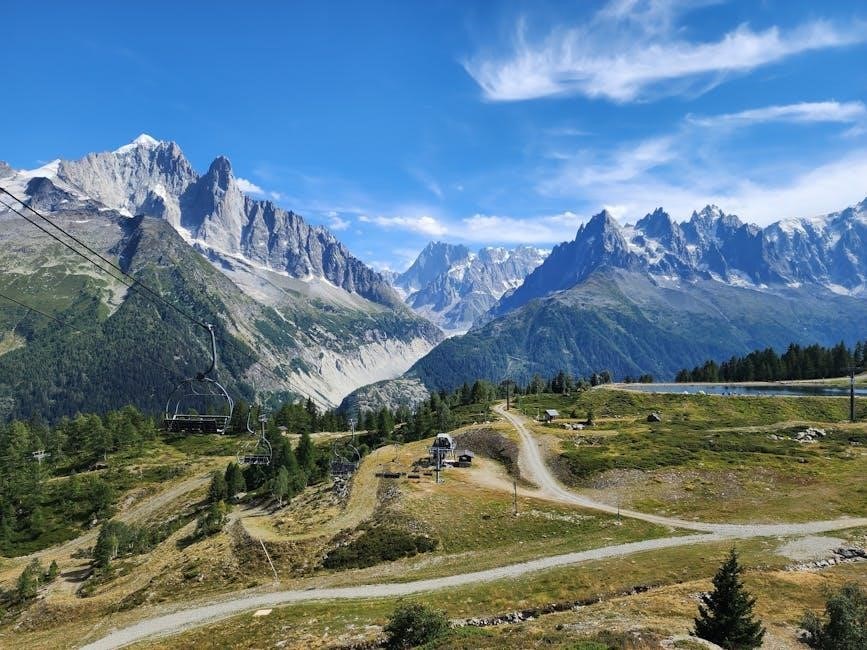
The Bossons Route presents a significantly more challenging ascent of Mont Blanc, demanding a higher level of technical skill and experience. Starting from the village of Les Bossons, this route follows the Bossons Glacier, requiring proficiency in glacier travel, including rope work and crevasse rescue techniques. It’s a longer route than the Goûter, typically taking several days to complete.
This path is characterized by steeper ice and snow slopes, mixed climbing sections, and a greater risk of objective hazards like icefalls and avalanches. Navigation can be complex, requiring excellent map reading and compass skills, or GPS proficiency. The Bossons Route is less crowded than the Goûter, but this also means less frequent track setting and potentially slower rescue response times. It’s best suited for experienced mountaineers comfortable with demanding alpine conditions and self-reliance.
The Gran Paradiso Route (Italian Side — Alternative)
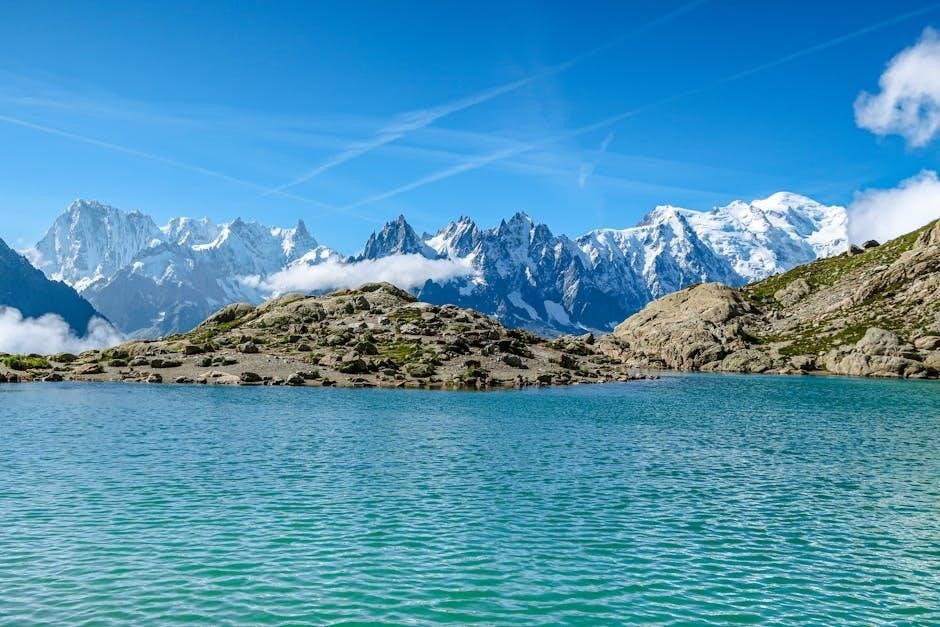
For those seeking an alternative to the French routes, ascending Gran Paradiso in Italy offers a compelling, though distinct, high-altitude experience. While not Mont Blanc itself, it serves as excellent preparation and provides stunning alpine scenery. The route typically begins from the village of Cogne, involving a trek through beautiful valleys before reaching the Vittorio Emanuele II Refuge.
The final ascent to Gran Paradiso’s summit involves glacier travel, often requiring crampons and an ice axe, though it’s generally considered less technically demanding than the Bossons Route on Mont Blanc. It’s a popular choice for acclimatization before attempting Mont Blanc, or as a standalone objective for experienced hikers. Be aware of potential altitude sickness and changing weather conditions. Permits and refuge reservations are essential, particularly during peak season. This route provides a taste of Italian alpine culture alongside a rewarding summit.
Essential Gear & Equipment
Successfully ascending Mont Blanc hinges on possessing the right gear. This isn’t simply about having items; it’s about understanding their purpose and proper usage. A comprehensive checklist is crucial, starting with a robust backpack (60-70 liters) to carry everything. High-quality mountaineering boots, properly broken-in, are non-negotiable, alongside warm, waterproof socks.
Layering is key; base layers, insulating mid-layers (fleece or down), and a waterproof/windproof outer shell are essential. Don’t forget a warm hat, gloves (multiple pairs), and sunglasses with UV protection. Technical equipment, detailed in the next section, is paramount for safety. Hydration is vital – carry at least 3 liters of water capacity. A headlamp with spare batteries, sunscreen, and a first-aid kit complete the core essentials. Careful gear selection dramatically increases your chances of a safe and enjoyable ascent.
Clothing & Layering System
A meticulously planned clothing system is paramount for managing Mont Blanc’s unpredictable weather. The layering principle – base, mid, and outer – allows for adaptability. Begin with moisture-wicking base layers (merino wool or synthetic) to keep skin dry. Insulating mid-layers, such as fleece or down jackets, trap warmth. Down offers superior warmth-to-weight but loses effectiveness when wet; synthetic alternatives perform better in damp conditions.
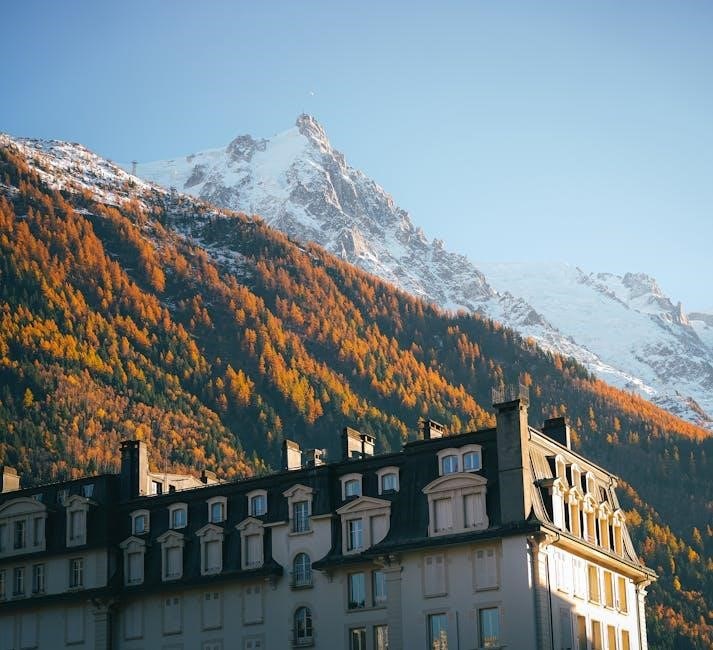
Your outer shell must be waterproof and windproof, providing protection from the elements. Choose breathable fabrics to prevent overheating. Essential accessories include a warm hat, covering ears and forehead, and multiple pairs of gloves – liner gloves, insulated gloves, and waterproof over-mitts. Don’t underestimate the importance of warm, waterproof socks. Regularly adjust layers to regulate body temperature and avoid sweating, which can lead to hypothermia.
Technical Equipment (Crampons, Ice Axe, Harness)
Beyond clothing, specialized technical equipment is non-negotiable for a Mont Blanc ascent. Crampons, securely fitted to your mountaineering boots, provide essential traction on ice and snow. Ensure they are compatible with your boots and properly adjusted. An ice axe is crucial for self-arrest and balance; practice using it before the climb. A mountaineering harness is vital for rope work, glacier travel, and crevasse rescue.
Essential accessories include a helmet, protecting against falling ice and rocks, and appropriate climbing ropes. Carabiners, slings, and prusiks are necessary for building anchors and performing rope techniques. A headlamp with spare batteries is critical for navigating in darkness. Don’t forget glacier glasses to protect your eyes from snow blindness and sunscreen with a high SPF. Regularly inspect all equipment for wear and tear, and know how to use it proficiently.
Acclimatization – The Key to Success
Successfully ascending Mont Blanc hinges on proper acclimatization to the altitude. The human body needs time to adjust to lower oxygen levels, preventing potentially life-threatening altitude sickness. Rushing the process dramatically increases risk. Acclimatization isn’t about physical fitness; it’s a physiological adaptation. Spend several days at increasing altitudes before your summit attempt.
Gradual exposure is paramount. Avoid flying directly into high-altitude locations. Instead, spend time hiking and sleeping at moderate elevations. Hydrate consistently and avoid alcohol. Listen to your body; any symptoms of altitude sickness – headache, nausea, fatigue – require immediate descent. Pre-acclimatization at home, through simulated altitude training, can be beneficial. Remember, acclimatization is a personal process; progress at your own pace.
Pre-Ascent Acclimatization Hikes
Before tackling Mont Blanc, undertake a series of acclimatization hikes to prepare your body for the demands ahead. These hikes should progressively increase in altitude and duration, mimicking the challenges you’ll face on the mountain. Focus on hikes between 2,500m and 3,500m for several days prior to your main ascent.
Excellent options include hikes in the Chamonix valley itself, such as trails around Lac Blanc or to the Refuge de Bellachat. These provide valuable exposure to altitude without the full commitment of the Mont Blanc ascent. Prioritize hikes that involve significant elevation gain, building both cardiovascular fitness and leg strength. Remember to hydrate well, eat nutritious food, and monitor yourself for any signs of altitude sickness during these preparatory hikes. Proper planning is crucial for success.
Acclimatization Schedule on the Mountain
Once on Mont Blanc, a structured acclimatization schedule is paramount. Avoid rushing directly to the summit; instead, adopt a ‘climb high, sleep low’ strategy. Spend at least one night at the Refuge de Tête Rousse (3,167m) before progressing to the Refuge du Goûter (3,805m). This allows your body to adjust to the increasing altitude.
At the Refuge du Goûter, prioritize rest and hydration. Consider a short acclimatization walk to a slightly higher point and return to the refuge. Avoid strenuous activity on arrival. The following day, before the summit attempt, a very early start is essential. Listen to your body; if you experience symptoms of altitude sickness, descend immediately. Proper acclimatization significantly increases your chances of a safe and successful summit. Patience is key.
The Ascent Itself: Day-by-Day Breakdown (Goûter Route Example)
The Goûter Route, typically completed over three days, requires careful pacing. Day 1: From Les Houches, ascend through forests and alpine meadows to the Refuge de Tête Rousse. This is a challenging hike, gaining significant elevation. Day 2: Continue to the Refuge du Goûter, navigating rocky terrain and potentially snowfields. This stage is physically demanding and requires focus.
Day 3: The summit attempt begins very early (typically around 2:00 AM). Ascend the Dome of Goûter, then navigate the exposed ridge to the summit of Mont Blanc; Descent is crucial; retrace your steps carefully, as fatigue increases the risk of accidents. Prioritize safety and teamwork throughout the ascent and descent. Remember to monitor weather conditions constantly.
Day 1: Les Houches to Refuge de Tête Rousse
The initial stage, from Les Houches (1000m) to Refuge de Tête Rousse (3167m), is a substantial undertaking, gaining over 2100 meters in elevation. The trail begins through lush forests, gradually transitioning to more open alpine terrain. Expect approximately 5-7 hours of hiking, depending on your pace and pack weight.
The path is well-marked but consistently uphill, demanding good physical conditioning. Water sources are limited, so carry sufficient hydration. Pay attention to the changing weather conditions, as they can shift rapidly in the mountains. The final ascent to the refuge involves navigating rocky sections. Upon arrival, rest, hydrate, and prepare for the challenges ahead. Acclimatization begins now; take it easy and monitor for any signs of altitude sickness.
Day 2: Refuge de Tête Rousse to Refuge du Goûter
Day two presents a challenging traverse from Refuge de Tête Rousse (3167m) to Refuge du Goûter (3805m), a crucial step towards the summit. This leg, taking roughly 4-6 hours, involves navigating the infamous “Grand Couloir,” a steep snow and rock gully prone to rockfall – traverse it quickly and carefully, especially during warmer hours.
The route becomes increasingly rocky and exposed, requiring sure footing and concentration. Crampons may be necessary depending on snow conditions. Maintaining hydration and energy levels is paramount. The Refuge du Goûter offers a welcome respite, but it’s also a staging point for the summit push. Prioritize rest and a substantial meal to prepare for the demanding final ascent. Monitor weather forecasts closely; conditions can deteriorate rapidly.
Day 3: Summit Attempt & Descent
The summit day begins very early – typically around 2:00 AM – to maximize chances of good weather and firm snow conditions. From Refuge du Goûter (3805m), the route ascends the Dome du Goûter, then continues along the Bosses ridge to the summit of Mont Blanc (4807m). Expect steep snow slopes and potentially icy sections, demanding proficient crampon and ice axe skills.
The final push is physically and mentally taxing. Reaching the summit is a monumental achievement, but remember that descent is often more dangerous. Fatigue and diminishing visibility increase risk. Retrace your steps carefully, utilizing rope techniques where appropriate. Descend to Refuge du Goûter for a well-deserved rest, then continue down to Les Houches, completing the challenging but rewarding ascent.
Potential Hazards & Risk Management
Ascending Mont Blanc presents significant hazards requiring diligent risk management. Altitude sickness is a primary concern; recognizing symptoms (headache, nausea, fatigue) and descending immediately are crucial. Crevasse falls pose a serious threat; proper rope techniques, including crevasse rescue training, are essential. Weather conditions can change rapidly, bringing whiteouts, high winds, and extreme cold – monitor forecasts constantly.
Rockfall and icefall are also present, particularly on the Goûter Route. Avalanches are a risk during certain conditions, necessitating careful route selection and assessment. Frostbite and hypothermia are dangers in extreme cold; appropriate clothing and awareness are vital. Carry a first-aid kit, know how to use it, and be prepared to self-rescue or assist others. Sound judgment and conservative decision-making are paramount.
Altitude Sickness & Treatment
Altitude sickness, or Acute Mountain Sickness (AMS), is a common concern on Mont Blanc. It occurs due to reduced oxygen levels at higher elevations. Symptoms range from mild (headache, nausea, fatigue) to severe (HAPE – High Altitude Pulmonary Edema, HACE – High Altitude Cerebral Edema). Recognizing early signs is crucial. Prevention is key: gradual acclimatization, hydration, and avoiding alcohol are vital.
Mild AMS can often be managed with rest and hydration. Descending to a lower altitude is the most effective treatment for moderate to severe symptoms. Never ascend further with worsening symptoms. Gamow bags (portable hyperbaric chambers) can provide temporary relief. Medications like Acetazolamide can aid acclimatization (consult a doctor beforehand). HAPE requires immediate descent and oxygen. HACE is life-threatening and demands urgent evacuation. Knowing the signs and acting swiftly can save lives.
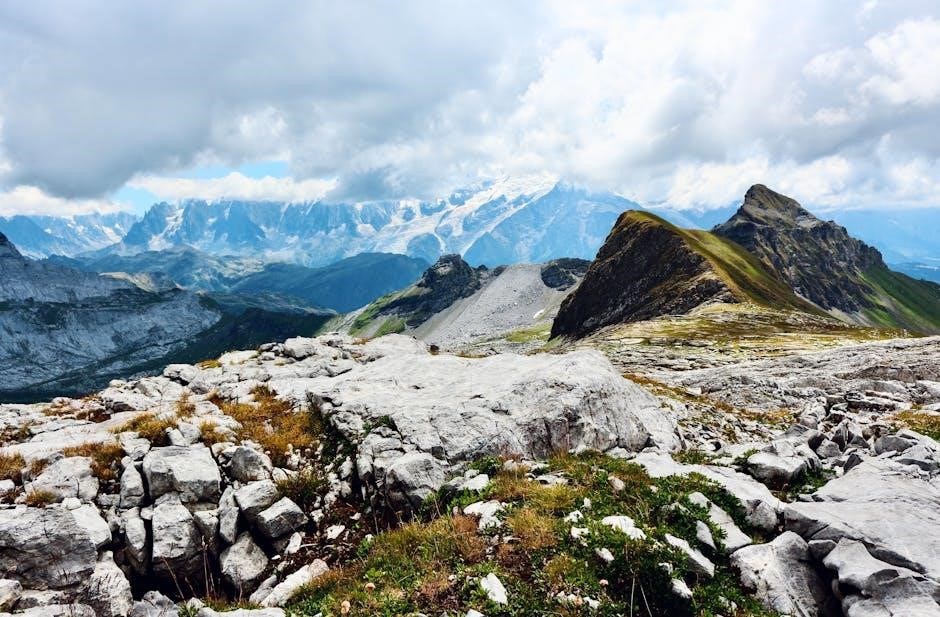
Crevasse Falls & Rope Techniques
Crevasses, deep cracks in glaciers, pose a significant hazard on Mont Blanc. A fall into a crevasse can be fatal without proper training and equipment. Rope travel is essential for glacier crossings. Teams should be roped together using a dynamic rope, distributing the load in case of a fall. Prusik knots are vital – allowing a climber to ascend the rope to rescue a fallen teammate.
Effective crevasse rescue requires extensive practice. Techniques include building anchors, creating a Z-pulley system to haul a climber out, and self-rescue methods. Regular rope checks are crucial to identify damage. Understanding snow bridge stability is paramount – avoid areas with questionable snow cover. Always carry a crevasse rescue kit including prusiks, pulleys, slings, and ice screws. Proper training with a qualified guide is non-negotiable before venturing onto glaciated terrain.
Hiring a Mountain Guide vs. Self-Guided Ascent
Deciding between a guided ascent and a self-guided attempt on Mont Blanc is critical. A mountain guide offers invaluable expertise, significantly enhancing safety. They provide local knowledge of conditions, route finding, and crucial rescue skills. Guides manage logistics, allowing climbers to focus on the ascent. This is especially beneficial for those with limited high-altitude experience.
Self-guided ascents demand extensive mountaineering experience, excellent navigation skills, and a thorough understanding of glacial travel and weather patterns. Responsibility for all decisions rests solely with the team. While potentially more affordable, the risks are considerably higher. Consider your experience honestly. If unsure, a guide is a worthwhile investment. A guide also handles permits and refuge reservations, simplifying the planning process.
Post-Ascent Recovery & Considerations
Descending Mont Blanc marks the end of a significant physical challenge, but recovery is paramount. Prioritize rehydration and nutrition immediately. Expect significant muscle soreness and fatigue for several days. Gentle walking and stretching can aid recovery, but avoid strenuous activity. Monitor for signs of altitude sickness, even during descent, as symptoms can sometimes be delayed.
Allow ample time for rest and recuperation before returning to normal activities. Consider a post-climb massage to alleviate muscle tension. Reflect on the experience and analyze what went well and what could be improved for future climbs. Properly clean and store your equipment to ensure its longevity. Finally, remember the mountain demands respect; share your knowledge and inspire others responsibly.