Teeth whitening shade guides are crucial tools for dental professionals, enabling standardized color comparison before, during, and after treatments․
What is a Teeth Whitening Shade Guide?
A teeth whitening shade guide is a standardized system dentists employ to assess and document a patient’s tooth color․ These guides typically consist of a series of porcelain or acrylic teeth, arranged in a spectrum of shades, ranging from light to dark․
They are essential for objectively measuring the initial tooth shade, tracking progress throughout whitening procedures, and ultimately, achieving predictable and aesthetically pleasing results․ The shade guide helps establish a baseline and allows for clear communication between the dentist and patient regarding expectations․
Why Use a Shade Guide?
Utilizing a shade guide ensures consistent and accurate tooth color assessment, minimizing subjective interpretation․ It’s vital for setting realistic patient expectations regarding whitening outcomes, as results vary based on initial shade and tooth characteristics․
Furthermore, shade guides facilitate effective communication within the dental team and provide a documented record of color changes throughout treatment․ This objective measurement is crucial for evaluating the success of whitening and for matching shades in restorative procedures․
Understanding Teeth Shade Systems
Dental shade systems categorize tooth color based on hue, value, and chroma, providing a standardized framework for consistent whitening assessments․
Vita Shade Guide: The Industry Standard
The Vita Shade Guide remains the most widely recognized and utilized system in dentistry for accurate tooth color determination․ Developed by Vita Zahnfabrik, it features a series of porcelain teeth arranged by shade, offering a visual reference for professionals․
This guide categorizes teeth into four main shades – A, B, C, and D – each with varying levels of intensity from 1 to 4, representing lighter to darker tones․ Dentists rely on Vita Shade Guides to establish baseline teeth colors before whitening, ensuring consistent and predictable results, and for matching restorations․
Other Common Shade Guides
While Vita is dominant, other shade guides offer alternatives for dental professionals․ The 3D R-20 Shade Guide, for example, presents a more nuanced system with 20 distinct shades, aiming for greater precision in color matching․
These guides often incorporate a broader spectrum of hues and chroma levels․ Other less common options exist, tailored to specific regional preferences or restorative material types, but generally, they strive to provide a reliable visual reference for achieving optimal aesthetic outcomes in teeth whitening and restorative dentistry․
3D R-20 Shade Guide
The 3D R-20 Shade Guide is a popular alternative to Vita, featuring a system divided into 20 distinct shades․ It’s designed for ease of use, particularly with cold light whitening systems, offering a classical approach to teeth bleaching shade charting․
This guide simplifies recording and observing color changes during treatment․ Its clear presentation allows professionals to accurately assess and document a patient’s progress, ensuring predictable and aesthetically pleasing whitening results․ It’s a valuable tool for consistent shade determination․
Other Less Common Guides
Beyond Vita and 3D R-20, several other teeth shade guides exist, though they are less frequently utilized in standard dental practice․ These alternatives often present unique color arrangements or methodologies for shade selection․
While potentially offering nuanced distinctions, their limited adoption can hinder inter-practitioner consistency․ Dentists may choose these guides based on personal preference or specific clinical needs, but widespread familiarity remains lower․ Accurate whitening relies on consistent, understood standards․

The Shade Scale Explained
Teeth shade scales utilize a system—often A1-D4—to categorize color based on hue, value, and chroma, aiding in precise whitening assessments․
Numbering System (A1-D4)
The commonly used teeth whitening shade guide numbering system, ranging from A1 to D4, provides a standardized method for classifying tooth color․ ‘A’ represents the most natural, lighter shades, while ‘D’ indicates darker, more saturated tones․ Numbers 1-4 denote chroma, or the intensity of the color, with 1 being the lightest and 4 the most intense․
Therefore, A1 is the lightest and most desirable shade, while D4 is the darkest․ This system allows dentists to accurately document a patient’s initial tooth color and track changes throughout the whitening process, ensuring consistent and predictable results․
Hue, Value, and Chroma
Understanding teeth color requires analyzing three key dimensions: hue, value, and chroma․ Hue refers to the dominant color – yellow or reddish-brown – influencing the overall tone․ Value describes the lightness or darkness of the tooth, ranging from very light to dark․ Chroma assesses the color intensity or saturation, indicating how vivid or muted the shade appears․
These three components work together to define a tooth’s unique color, allowing dental professionals to precisely match shades during whitening and restorative procedures for natural-looking results․
Hue: Identifying the Yellow-Reddish Tone
The hue dimension of a tooth’s color identifies the dominant yellow or reddish-brown tone present․ It’s crucial for accurate shade matching because teeth aren’t simply “white”; they exhibit subtle variations․ Shade guides categorize hues, allowing dentists to pinpoint the specific undertone of a patient’s teeth․
Correctly identifying the hue is fundamental for achieving natural-looking whitening results, ensuring the final shade complements the patient’s complexion and existing tooth color․
Value: Measuring Lightness or Darkness
Value refers to how light or dark a tooth appears, ranging from very light (1) to very dark (4) on most teeth whitening shade guides․ This is a primary determinant of the overall brightness achieved through whitening procedures․ Assessing value accurately is vital for setting realistic patient expectations․
Changes in value are often the most noticeable aspect of teeth whitening, and careful monitoring throughout the process ensures optimal aesthetic outcomes․
Chroma: Assessing Color Intensity
Chroma describes the strength or saturation of a color, indicating how vivid or muted the yellow or reddish tones within a tooth are․ On teeth whitening shade guides, chroma levels typically range from 1 (least intense) to 3 (most intense)․
Reducing chroma is a key goal of whitening, as it diminishes unwanted colorations․ Accurate chroma assessment helps dentists tailor treatments for optimal results and patient satisfaction․
How Shade Guides are Used in Whitening
Shade guides establish a baseline tooth color, monitor whitening progress, and help dentists set achievable expectations for patients seeking brighter smiles․
Initial Shade Assessment
Before commencing any teeth whitening procedure, a meticulous initial shade assessment is paramount․ Utilizing a shade guide, the dentist accurately determines the patient’s existing tooth color․ This involves visually comparing the teeth to the various shades presented on the guide under standardized lighting․
Careful consideration is given to all teeth, not just the most prominent ones, as variations can exist․ Documenting this initial shade provides a crucial reference point for evaluating the effectiveness of the whitening treatment and demonstrating visible improvements to the patient․
Tracking Whitening Progress
Throughout the teeth whitening process, regular shade assessments using the shade guide are essential for monitoring progress․ Comparing the teeth to the guide at intervals – typically after each treatment session or stage – allows the dentist to quantify the color change achieved․
This objective tracking ensures the treatment is effective and helps determine if adjustments are needed․ Detailed records of these shade changes provide valuable documentation and demonstrate the treatment’s success to the patient;
Setting Realistic Expectations
Utilizing a teeth whitening shade guide during the initial consultation is vital for managing patient expectations․ Every individual’s teeth respond differently to whitening, and the starting shade significantly impacts the achievable results․
The guide visually demonstrates the potential range of whitening, preventing unrealistic hopes for dramatically brighter teeth․ A dentist can accurately illustrate likely outcomes based on the patient’s current shade, fostering a transparent and satisfying experience․
Factors Affecting Whitening Results
Several factors influence teeth whitening outcomes, including the initial shade, enamel thickness, and the type and severity of existing stains․
Initial Tooth Shade
A patient’s starting tooth shade significantly impacts achievable whitening results; darker teeth generally require longer treatment times and may not reach the same level of brightness as lighter teeth․
Dental professionals utilize shade guides – like Vita or 3D R-20 – to accurately assess and document the initial color before commencing any whitening procedure․ This baseline is essential for tracking progress and setting realistic patient expectations․
Understanding the initial shade allows clinicians to tailor whitening strategies and predict potential outcomes more effectively, ensuring patient satisfaction․
Enamel Thickness
Enamel thickness plays a vital role in teeth whitening outcomes; thinner enamel reveals more of the underlying dentin, potentially leading to increased sensitivity and a limited whitening response․
Individuals with thicker enamel generally respond better to whitening treatments, achieving brighter results with less risk of sensitivity․ A thorough clinical examination, alongside shade assessment, helps determine suitability․
Dentists consider enamel thickness when selecting appropriate whitening agents and concentrations to minimize adverse effects and maximize efficacy․
Stain Type and Severity
The type and severity of teeth stains significantly impact whitening success; extrinsic stains, on the surface, respond well to polishing and whitening agents, while intrinsic stains are more challenging․
Shade guides help assess stain severity, categorizing discoloration for tailored treatment plans․ Tetracycline stains, for example, require specialized approaches․
Understanding the origin – coffee, tobacco, age – informs product selection and realistic expectation setting, ensuring optimal results and patient satisfaction․

Types of Teeth Shade Charts
Teeth shade charts come in physical and digital forms, including spectrophotometers and digital cameras with specialized shade-matching software for accuracy․
Physical Shade Guides
Physical shade guides represent the traditional method for teeth color assessment, consisting of a series of porcelain or acrylic teeth arranged by hue, value, and chroma․ These tangible tools allow dentists to directly compare a patient’s teeth to standardized shades under controlled lighting․
The Vita Shade Guide is a prime example, widely recognized as the industry standard․ These guides are portable and don’t require batteries or software, making them reliable in any clinical setting․ However, subjective interpretation can influence results, requiring experienced clinical judgment․
Digital Shade Guides
Digital shade guides offer a more objective and precise approach to teeth color matching, minimizing subjective errors inherent in traditional methods․ These technologies utilize devices like spectrophotometers and digital cameras equipped with specialized software․
Spectrophotometers measure reflected light wavelengths, providing accurate color data․ Digital cameras, paired with shade matching software, analyze images to determine teeth shades․ These systems enhance consistency and documentation, aiding in treatment planning and evaluation․
Spectrophotometers
Spectrophotometers represent a highly accurate method for determining teeth shades, utilizing the science of light reflection․ These devices emit a specific light spectrum and measure the wavelengths reflected by the tooth surface․
This data is then translated into precise color values, minimizing subjective interpretation․ Spectrophotometers offer a standardized, objective assessment, crucial for consistent whitening results and accurate matching for restorations like veneers or crowns, ensuring optimal aesthetic outcomes․
Digital Cameras with Shade Matching Software
Digital cameras, paired with specialized shade matching software, offer a convenient and increasingly precise method for teeth color determination․ These systems capture images of the teeth under controlled lighting, then analyze the color data using sophisticated algorithms․
The software compares the captured shade to established shade guides, providing a digital shade reading․ This technology reduces subjectivity and allows for easy documentation of whitening progress, enhancing treatment planning and patient communication․
Using Shade Guides Effectively
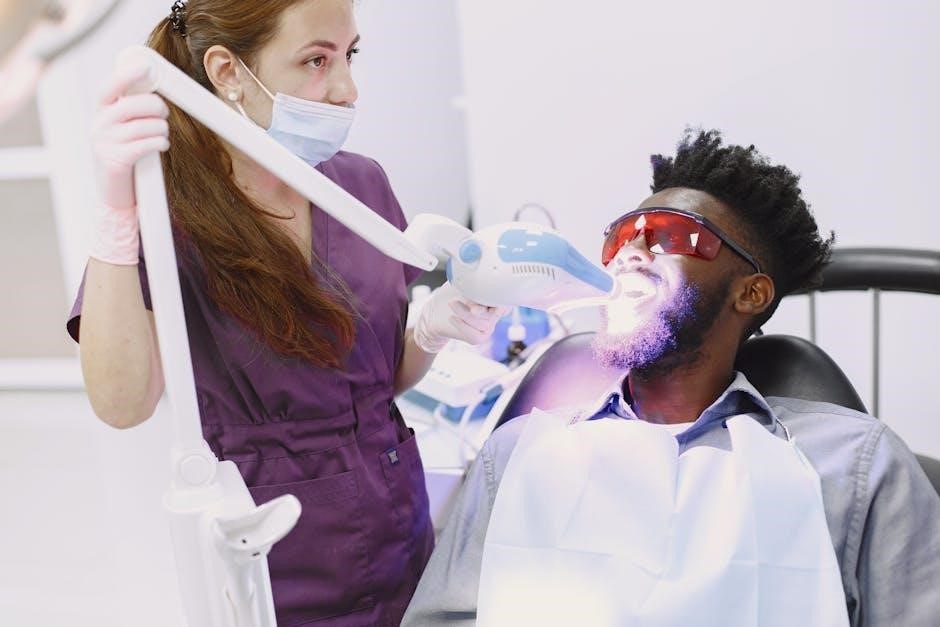
Optimal shade matching requires consistent lighting, viewing angles, and hydrating teeth to eliminate dehydration’s impact on color perception for accurate results․
Proper Lighting Conditions
Achieving accurate teeth shade matching heavily relies on standardized lighting․ Natural daylight is ideal, but often inconsistent․ Dental offices typically utilize color-corrected lighting, specifically around 5500K, mimicking daylight’s spectral qualities․
Avoid ambient room lighting, as it introduces unwanted hues․ Direct light should illuminate the teeth evenly, minimizing shadows that can distort color perception․ Consistent lighting ensures reliable comparisons throughout the whitening process and across appointments, contributing to predictable and satisfactory outcomes․
Consistent Viewing Angle
Maintaining a consistent viewing angle is paramount for accurate teeth shade assessment․ The angle at which light reflects off the teeth significantly impacts perceived color․ A standardized angle, typically perpendicular to the tooth surface, minimizes distortion․
The observer’s position should also remain constant during each assessment․ Variations in angle can lead to subjective misinterpretations of the shade, hindering effective whitening treatment planning and progress tracking․ Precision in viewing angle ensures reliable and reproducible results․
Hydrating Teeth Before Shade Matching
Proper hydration of the teeth is essential before utilizing a shade guide․ Dehydrated teeth appear darker and more yellowed due to reduced light scattering․ Applying a small amount of water or a hydrating agent rehydrates the enamel, revealing the true underlying shade․
This step minimizes errors in shade selection, ensuring the dentist chooses the most appropriate whitening protocol or restorative material color․ Consistent hydration protocols are vital for accurate and repeatable shade matching throughout treatment․
Quadrant-Based Shade Assessment
Dividing the mouth into quadrants allows for a comprehensive shade evaluation, acknowledging that tooth color isn’t uniform across the arch․
Dividing the Mouth into Quadrants
Dental professionals routinely divide the mouth into four distinct quadrants for a thorough teeth whitening shade assessment․ These quadrants are delineated horizontally, separating the upper and lower arches, and vertically, along the midline of the face․ This systematic approach acknowledges that natural tooth coloration isn’t consistently uniform throughout the entire mouth․
Individual teeth within each quadrant can exhibit subtle variations in hue, value, and chroma․ Assessing each quadrant independently ensures a more accurate representation of the patient’s overall shade, leading to more predictable and aesthetically pleasing whitening results․
Importance of Assessing All Quadrants
Complete quadrant-based shade assessment is paramount for successful teeth whitening․ Neglecting even one quadrant can lead to uneven results and patient dissatisfaction․ Variations in enamel thickness, stain distribution, and underlying dentin contribute to differing shades across the mouth․
A comprehensive evaluation using a shade guide ensures the dentist understands the full spectrum of coloration․ This detailed approach allows for a customized whitening plan, optimizing the outcome and achieving a harmonious, natural-looking smile․ Ignoring quadrants compromises precision․

Shade Guide and Cosmetic Dentistry
Shade guides are vital for matching restorations like veneers and crowns to the patient’s desired whitening shade, ensuring aesthetic harmony․
Matching Shade for Veneers
Achieving a natural and aesthetically pleasing result with veneers heavily relies on precise shade matching, utilizing teeth whitening shade guides․ Dentists carefully compare the veneer material to the surrounding teeth, considering factors like translucency and surface texture․
The goal is seamless integration, where the veneer blends harmoniously with the existing dentition․ Digital photography and spectrophotometry further enhance accuracy, minimizing discrepancies and ensuring patient satisfaction․ Proper shade selection is paramount for long-lasting, beautiful veneer outcomes․
Shade Selection for Crowns and Bridges
Similar to veneers, accurate shade selection is vital when fabricating crowns and bridges, employing teeth whitening shade guides for reference․ These restorations must seamlessly match the adjacent natural teeth in color, translucency, and overall appearance․
Dentists utilize shade tabs under standardized lighting to determine the optimal hue, value, and chroma․ Digital shade matching technologies are increasingly used to enhance precision and ensure a natural-looking, long-lasting restoration that complements the patient’s smile․
Teeth Whitening Products and Shade Guides
Shade guides help assess results from various teeth whitening products—strips, in-office treatments, and custom trays—ensuring optimal and predictable outcomes․
Over-the-Counter Whitening Strips
While convenient, over-the-counter teeth whitening strips often lack the precision of professional treatments, making shade guide usage less direct․ Users can, however, utilize a shade guide before strip application to establish a baseline tooth color․
Periodically comparing teeth to the guide throughout the process offers a subjective assessment of progress․ It’s important to remember that strip results vary significantly, and a shade guide provides a visual reference, but isn’t a precise measurement tool in this context․ Realistic expectations are key when using these products․
Professional In-Office Whitening
Shade guides are integral to professional in-office teeth whitening procedures, allowing dentists to accurately document the initial tooth shade before treatment begins․ This baseline is crucial for tracking progress and ensuring patient satisfaction․
Throughout the whitening session, the dentist will frequently reference the shade guide to monitor color changes and adjust the whitening agent accordingly․ Post-treatment, the final shade is recorded, demonstrating the achieved results and setting expectations for maintenance․
Custom Tray Whitening
With custom tray teeth whitening, a shade guide plays a vital role in both the initial assessment and ongoing monitoring of results․ Dentists use the guide to determine the starting shade and create trays tailored for optimal gel contact․
Patients are often encouraged to self-assess shade changes using the shade guide at home, documenting their progress․ Regular check-ups allow the dentist to verify these observations and adjust the whitening plan as needed, ensuring desired outcomes are achieved safely and effectively․

Limitations of Shade Guides
Shade guides possess inherent subjectivity in perception and are susceptible to metamerism, where colors appear to match under certain lighting but differ in others․
Subjectivity in Shade Perception
Teeth shade perception isn’t entirely objective; individual interpretation plays a significant role․ Factors like a dentist’s or patient’s visual acuity, ambient lighting, and even fatigue can influence color assessment․ What one person perceives as a specific shade, another might see slightly differently․
This inherent subjectivity means relying solely on visual shade matching can lead to inconsistencies․ Furthermore, the human eye isn’t always adept at discerning subtle color variations, especially within the nuanced range of tooth shades․ Therefore, supplemental tools are often employed․
Metamerism
Metamerism refers to a phenomenon where two colors appear to match under one lighting condition but differ under another․ This is a critical consideration in teeth whitening, as the perceived shade of a tooth can change depending on the light source․ A shade that looks ideal indoors might appear different outdoors․
Dental professionals must be aware of metamerism when selecting shade guides and matching restorations․ Utilizing standardized lighting and multiple light sources during shade matching minimizes the risk of mismatches caused by this optical illusion, ensuring optimal aesthetic results․
Future Trends in Shade Matching
AI and improved digital technologies are revolutionizing shade analysis, promising more accurate and consistent teeth whitening results for patients․
Artificial Intelligence (AI) in Shade Analysis
AI is poised to transform teeth shade matching, moving beyond subjective visual assessments․ Machine learning algorithms can analyze digital images of teeth, factoring in variables like lighting and individual screen calibrations․ This leads to more objective and reproducible color determinations․
AI-powered systems can also predict whitening outcomes based on a patient’s initial shade and treatment plan, enhancing treatment planning and patient expectations․ Furthermore, AI can assist in identifying metamerism, a phenomenon where colors appear to match under certain lighting but differ under others, ensuring optimal aesthetic results․
Improved Digital Shade Matching Technologies
Advancements in digital shade matching are enhancing precision and efficiency in teeth whitening․ Modern spectrophotometers offer more accurate color readings than traditional methods, minimizing errors caused by ambient light or observer variability․ Digital cameras paired with specialized software provide a convenient and cost-effective alternative․
These technologies allow for detailed documentation of shade changes throughout the whitening process, facilitating better communication between dental professionals and patients․ Improved algorithms and calibration techniques are continually refining the reliability of digital shade matching systems․